The Seoul Climate Card short-term pass covers unlimited travel within a defined network. Before buying, check your stations, your first travel day and your refund options. A Seoul station name alone does not prove that every line there accepts the pass.
Last checked: November 16, 2026
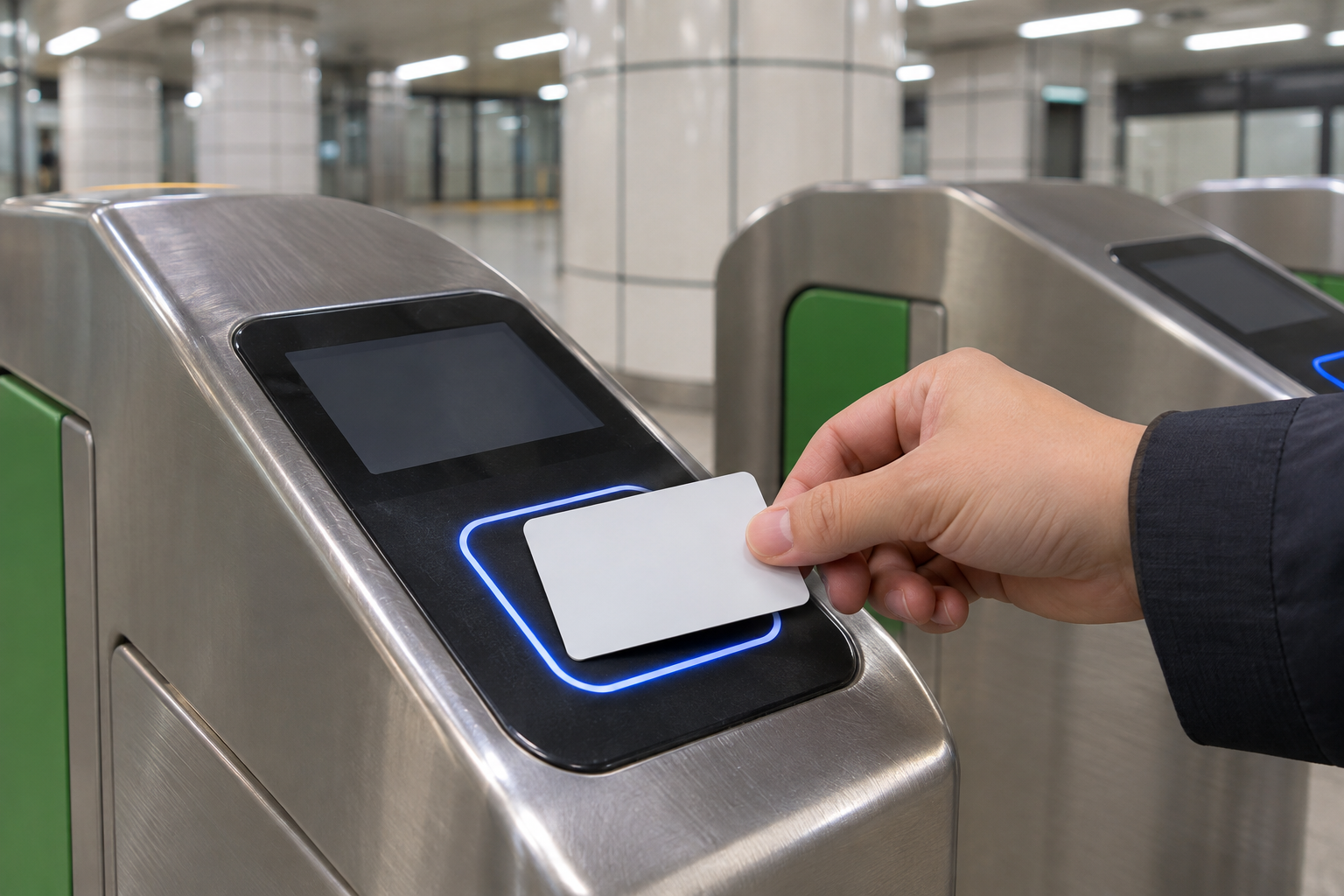
We read public official pages without logging in. We have not bought, loaded or ridden with this card, operated a ticket machine, or requested a refund. The cover is a generated illustration.
Key takeaways
- Check both boarding and exit stations, including the line at an interchange.
- Load the pass on the day you want its period to begin.
- Keep another payment method for excluded journeys.
- Investigate refunds before loading, especially without a Korean bank account.
In this guide
- Which Climate Card still exists?
- Check the station and the line
- Airport trains and buses need separate checks
- A day starts when you load
- Buy the card, then load the pass
- Remaining days are not a cash balance
- Is it worth buying for your itinerary?
- FAQ
- Sources and what we checked
Check again before paying: Prices and conditions below were checked on November 16, 2026 and may change. Use the current short-term rules, not an old monthly-pass map.
Which Climate Card still exists?
Seoul’s current English overview says the 30-day prepaid product stopped accepting reloads after August 31, 2026, while short-term passes continue.
Standard passes cost ₩5,000/₩8,000/₩10,000/₩15,000/₩20,000 for 1/2/3/5/7 days, plus a ₩3,000 physical card; see our transport cost guide for the wider fare comparison.
Check the station and the line
Under Seoul’s October 1, 2026 coverage notice, previously included areas such as Goyang, Gwacheon, Guri, Seongnam, Hanam and Namyangju are excluded from rail coverage.
The current city table marks Myeong-dong on Line 4 and Gangnam on Line 2 as usable for boarding and alighting. Gangnam’s Shinbundang platforms are excluded, as are GTX services. At that interchange, use the Line 2 gates for a covered journey.
Do not rely on a whole line’s color: check the specific station in the city’s table. There is a real source conflict here: Tmoney’s visitor guide still includes Seonbawi in its Line 4 range, while Seoul’s current table marks it unavailable. Confirm with station staff before planning that stop.
If you board inside coverage and exit outside it, Seoul says staff collect the fare for the entire boarding-to-exit journey. It is not merely an extra fare for the uncovered portion. Use our Seoul subway guide to prepare the route and transfer details.
Airport trains and buses need separate checks
The airport exception works toward the airport: board within coverage and alight at Incheon Airport Terminal 1 or Terminal 2 on the Airport Railroad. You cannot board there with the pass. Other outside-Seoul stops such as Unseo are not included in this exception.
Use the all-stop service for that journey; AREX’s transport terms require a separate valid Express ticket for the Express train.
The city table allows boarding and alighting at Gimpo Airport on the Airport Railroad. For your arrival journey, compare separate options in our Incheon Airport to Seoul guide.
Seoul-licensed city and village buses, including night and circular services, are covered even when boarding or leaving outside Seoul. Metropolitan express buses, airport buses and buses licensed in Gyeonggi or other regions are excluded.
Check the bus’s license region and service type, not just its stop location; our English bus-app guide helps with route planning. The short-term pass excludes Ttareungi bikes and the Hangang Bus.
A day starts when you load
The pass starts on its loading date, not on your first tap, and cannot be loaded for a future start date. Unused days still expire.
The Korean overview, updated October 12, 2026, gives the exact timing as “사용 개시일 첫차(04시)부터 사용 종료일 막차(통상 사용 종료일 익일 04시)까지 사용가능”. In English: from the start date’s first service at 04:00 through the expiry date’s last service, normally around 04:00 the next day.
For example, loading a one-day pass at 18:00 does not buy travel until 18:00 tomorrow. Do not treat the 04:00 wording as a promise that your train runs that late.
The city FAQ also distinguishes an expiring pass on an overnight bus from a new pass loaded between midnight and 04:00: the newly loaded pass cannot cover the previous day’s still-running night bus.
Buy the card, then load the pass
Seoul lists new vending machines at Seoul Metro Line 1–8 stations and convenience stores near Line 9, Ui-Sinseol and Sillim stations as physical-card sellers.
Use this preparation sequence:
- Buy the physical card separately.
- At a supported station reload machine, select the short-term duration you need and complete payment following its instructions.
- Check the loaded period before leaving; the expiry date also appears when you tap at a gate.
Seoul’s March 17, 2026 announcement permits overseas-issued credit/debit cards at the new Line 1–8 machines for purchase and short-term loading. Its general English overview still lists domestic cards, so the pages differ. Check the machine’s payment options and fees; see our foreign-card guide for preparation.
The FAQ allows ordinary physical-card use without website registration. Mobile issuance requires identity verification; it directs people who cannot complete that check to the physical card. A working travel data connection is not proof of eligibility.
Remaining days are not a cash balance
You can reload the same physical card after the short-term period expires. You cannot pause its remaining days by simply not riding.
Do not treat it as ordinary stored-value Tmoney for extra fares or shopping. The FAQ describes an additional stored-money function as not planned, and Tmoney excludes retail purchases. Keep separate transport payment for uncovered rides; our Tmoney and WOWPASS guides explain those products.
The standard refund is the loaded amount minus actual transport use and a ₩500 fee, requested within the valid period. The normal physical card’s ₩3,000 purchase price is not refunded. Refunds are not calculated as a fixed payment for each unused day.
Without a Korean bank account, Tmoney’s visitor instructions require stopping the card at a supported station machine and applying at T-Town before expiry, then returning after three business days for cash. The listed cash-refund route covers the latest pass funded with cash or an overseas-issued card; T-Town is on the first floor of Seoul City Tower, 110 Huam-ro, and a passport may be required.
Seoul’s general FAQ instead describes website registration and account refunds; its main guide also mentions the foreign-visitor headquarters exception. Because these instructions differ, confirm your payment method’s refund route with Tmoney before loading.
Is it worth buying for your itinerary?
Our calculation assumes an existing ordinary transit card, adult subway journeys within 10 km, no transfer or early-morning discounts, and no payment surcharges. Seoul Metro lists that base fare as ₩1,550.
A new one-day Climate Card costs ₩8,000 including the plastic: five separate journeys cost ₩7,750 normally, while six cost ₩9,300. Under those assumptions, six covered journeys make the new pass cheaper; five do not.
For an evening with just two such journeys, ordinary fares total ₩3,100. That favors keeping your existing card; excluded airport-arrival or regional journeys do not improve the pass calculation.
FAQ
Can I use it from Incheon Airport to Seoul?
No: the airport exception permits alighting at Terminal 1 or 2, not boarding there.
Does a one-day pass last 24 hours?
No: loading starts that service day’s validity, rather than a rolling period from your first tap.
Does it include Seoul’s public bikes?
No: Ttareungi and the Hangang Bus are excluded from short-term passes.
Can I keep the card for another visit?
The physical card is reusable; load a new pass after the previous period expires and recheck the rules before returning.
Sources and what we checked
We read Seoul’s current Korean and English guides, its FAQ and dated notices, Tmoney’s visitor instructions, AREX’s transport terms and Seoul Metro’s fare page. We also read the linked Korea Sorted articles to avoid repeating their quotations. Machine screens, store stock, personal identity checks and actual refunds remain untested.